
I live in a part of the world where atheism is the norm. Science is seen by many as providing all the answers that we humans need. Belief in God is often viewed as unnecessary, superstitious and ignorant. The dismissive self-confidence among some atheists that sometimes mimics religious fanaticism, is not a sign of superior knowledge, however, but of ignorance. It’s the Dunning-Kruger Effect.
Some view the idea of God as a tool invented by the human ego for social control and power. Some view God as a crutch for the weak. Either way, the idea of God is reduced to some kind of product or function of the human survival instinct.
The idea of God has obviously had these various functions for various people. God has been used to explain the inexplicable (“God of the gaps”), to accumulate and exert power and control over large groups of people, and also as an “opium” or painkiller for the needy and suffering.
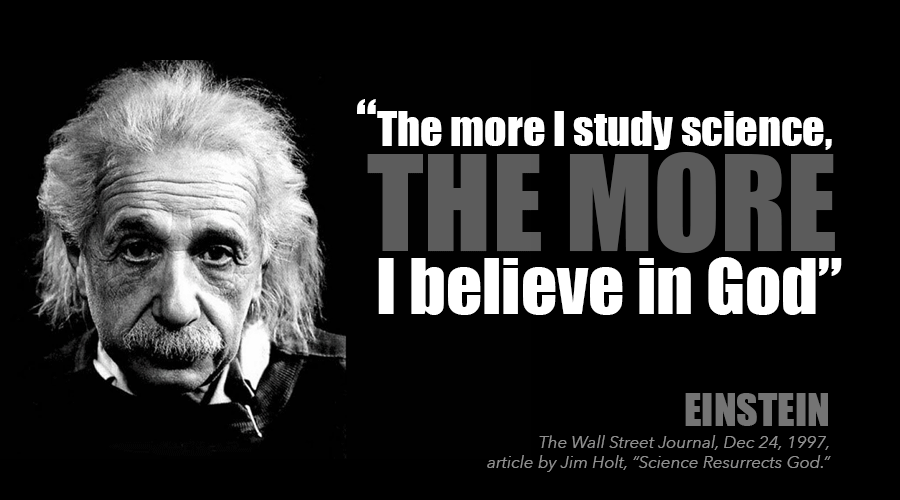
But this is not the whole truth. Many of the most prominent scientists and social activists throughout history and today are people of fervent faith in God. Scientific discoveries have awakened and inspired faith in a Creator. Faith in God has been an incentive to boldly criticize corruption and resist the abuse of power. Faith in God has been a driving force for some of the most influential and successful people in modern society.
It seems from various studies that belief in God tends to decline as the sense of security and prosperity increases in a population. The illusion that we’re in control of our lives makes the necessity of God seem less relevant and might lead us to place our ultimate trust in ourselves and in humanity’s achievements. Is this kind of faith based on a true understanding of reality? I don’t think it is.
“The more I learn, the more I realize I don’t know.”
— Albert Einstein, theoretical physicist
The Dunning-Kruger Effect. With increased knowledge comes an increased awareness our own limitations in knowledge and understanding. Also, awareness of our own vulnerability. I reject atheism because it tends to undermine this awareness on a philosophical and existential level.
Atheism often poses as a concern for facts, as factual certainty, when it is in reality a species of particularly uncritical faith. It pretends neutrality while it is in reality ideological. Thus, it seems to have a blinding effect on the human mind to its own limitations and biases in the quest for truth.
Many people would say it’s unreasonable or even insane to believe that we’re the only intelligent beings in the universe. But with the adoption of an atheistic worldview many people uncritically and baselessly rule out and even laugh at the possibility of other forms of life that may challenge our current human understanding. This is obviously wildly inconsistent. Obviously, life “out there” might exist in forms way different and more powerful or more advanced than we can imagine. Considering the vastness of the universe, it seems like the most natural thing in the world to assume the existence of lifeforms greater than ourselves.

Agnosticism may seem more reasonable and objective than atheism since it at least in word confesses human limitation in the quest for God. However, in practice agnosticism makes the same atheistic leap of faith since it teaches that God cannot be known to us human beings. On the one hand, agnostics affirm that we indeed can obtain some knowledge of the world through science. But then they make the dogmatic claim that this knowledge cannot tell us anything about “God“. This is an entirely faith-based assumption. They make the assumption that the observable universe cannot be a physical manifestation of God or God’s attributes. They operate with definitions and understandings of “nature” and “God” that they assume to be accurate.
But what if God and the universe are two sides of the same coin, as other people claim?
The pantheistic understanding is that the universe and God are one and the same. This would seem like a more reasonable and natural assumption to make since it defines God by something we can know and observe. Rather, agnostics make the much more far-fetched assumption that God is an entity completely separated from our world, an unknowable entity that’s completely hidden from our senses, leaving behind no trace for us to be found by whatsoever. The obvious question is: How can agnostics know that God is unknowable? What evidence can they point to that can confirm this? How does 80% of the human population have an idea of God if God truly is something completely unknowable to us? Where did this idea of God come from to begin with? Agnosticism’s claim about a completely unknowable God is absurd and self-contradictory.
The teaching that God is unknowable is a dogmatic stance or belief that is no more obvious or rational than other views. By assuming that God is entirely separated from our knowable world, agnosticism does the same as atheism by placing an unreasonable amount of faith in its own preconceived and highly restricted ideas of God (“God is unknowable”, “God is unobservable”, “God is non-physical”, “God is nonsensical”, “God is distant”, “God is unnatural” etc.).
I do agree with the agnostic point that we cannot have any absolute knowledge of God or the nature of reality since we as human beings don’t possess all knowledge. All we have are human, fallible theories. That’s exactly why purely dogmatic ideas of God that are unreasonable and far-fetched should be avoided. We don’t have to put our faith in something that offends and undermines our intellectual and moral capacities.
Again, most people, including agnostics, believe that we indeed can perceive, grasp and gain some useful knowledge from studying nature. We’re able to use this partial knowledge in practical, effective ways to better our lives. The immensity and impossibility of the task of trying to understand the universe does not lead humankind to indifference and complacency. We are pragmatic about it. We don’t say, “It’s no use doing research, because we can never attain all knowledge and be 100% certain that we’re not wrong.”
Why should be indifferent about God? Why should we assume that we cannot develop any useful knowledge about God both collectively and individually? Studies have shown that faith in God can benefit our health, for instance.
Making sense of nature. Speaking for myself—although my understanding and knowledge is indeed limited, I can perceive the presence of order, beauty, and ingenuity pervading nature. These are qualities that can be perceived and appreciated with my mind—my intellect and my emotions. Hence, it seems reasonable to believe that there’s an intelligent Mind behind the systematic operations of the universe. Also, if we exist as living persons with minds and consciousness, it seems unreasonable and unnatural to me to believe that our existence is the result of unintelligent, impersonal and blind forces. There is nothing in my current scope of knowledge that implies that intelligent life, or life at all, can be created spontaneously apart from the creative actions of a living, conscious entity.
The atheistic/agnostic worldview interprets the forces in nature as mechanical qualities. This is a view also shared by many who believe in God. Nature and God are assumed to be entities that mostly do not interact with each other. Nature is viewed as a self-perpetuating machine packed with laws and forces that keep it going by itself. God, if he exists, may have started everything and may sometimes interfere with nature through miracles—phenomena that go against or break the laws of nature. But for the most part, God leaves nature to run its own course.
Another theistic view. I am a theist, believing in a Creator God that intervenes in our universe. Moreover, I view the forces and laws working in nature as tangible manifestations of God’s active presence and constantly working power pervading all the universe. I view the elemental forces in nature as Something that is alive and intelligent, not something blind and unconscious. I see a living, active Power in nature continuously working in a million ways to uphold it. This view implies that the force of gravity, for instance, is a manifestation of God’s power. Gravity is not something inherent to the universe itself, but rather a divine manifestation of power in the universe. God operates in systematic and ordered ways in the universe in accordance with divinely ordered laws, such as the law of gravity. These laws are never annulled or changed, but God can use and manipulate them in a million ways that stretch far beyond the scope of human knowledge and understanding. Miracles don’t break the laws that God has set in place, but they are mysterious to us only because of our own limited understanding of God’s laws.
My view can be described as a version of panentheism (“all within God”, implying that God pervades and transcends the universe), which is not to be mistaken for pantheism (“all is God”, meaning that the universe itself is God). While I believe pantheism to be incompatible with biblical theology, I believe that certain versions of panentheism are indeed confirmed by the Bible (which I might explore in another post).
With this view, there is no clear line between the natural and the supernatural, or between natural processes or divine miracles. For instance, the healing of a wound—a highly familiar process to us which we through scientific research are able to make sense of—is in a panentheistic worldview understood as a manifestation of God’s creative act just as much as the resurrection of the dead. Both are divine acts of creative power. The only difference is that the healing of a wound is a phenomenon that we’ve largely been able to study and understand and familiarize ourselves with. Through frequent observation, we’ve come to regard it as quite normal and nothing special. Phenomena that are regarded as miraculous or paranormal also happen in accordance with the laws of nature, only in ways that are (currently) not studied or understood due to their rareness. Just as we can manipulate the laws of nature to produce a desired result, God can do the same in far greater ways.
To sum it all up: I find it more reasonable to belive firstly that since nature is intelligently ordered in a way that makes sense intellectually, there must be an intelligent Creator; and secondly, that the elemental forces working in nature are evidence of a living, omnipresent Power; and thirdly, since we ourselves exist as personal beings with a purpose and a will, the Creator also must be a personal being with a purpose and a will.
Every human idea about God might of course be erroneous, including mine. Using our senses critically, being open to change our minds, and actively choosing those things that seem more reasonable is the best we can do. Doing this therefore leads me to a basic faith in God’s existence.
This is my testimony. What is yours? Feel free to share in the comment section below!
 Kendel's Messiah
Leave a comment