
What do you do when everything that you’ve built your life upon fails you?
In a previous post, I shared probably the most defining experience for my identity formation as a teenager. This mountain-top experience serves as the beginning of a very optimistic and happy period in my life that lasted for several years. This next part of my life that I’ll be expounding on represents the opposite.
Gradual burn-out. My entering into this next phase did not begin with a sudden realization similar to that of my conversion. Rather, it was a gradual realization and burn-out. I was made aware of my own sexuality years before my conversion, around the age of 14 or 15. However, my religious conversion at 16 put all of that far into the background. I’d come to the conclusion that I was gay, but felt this was not anything I needed to address or express. My homosexual orientation was not a choice and hence not a sin, I was taught, but to act upon it was a choice and a sin. In my religious conversion experience, I’d felt a love and acceptance from God that satisfied my soul. I fully believed that God would meet all my needs as a celibate man and hence, my sexual orientation was not an issue that I felt a need to address.
Slowly, however, my mind began to feel uneasy and restless. Although I didn’t fully realize it at the time, a profound existential loneliness began to grow inside me. I was still devoting all of my time to spiritual activities in some way, whether it be through my theological studies, church work, music, social activities or prayer. And yet, the things that had brought me so much life and joy and meaning began to feel hollow and empty.
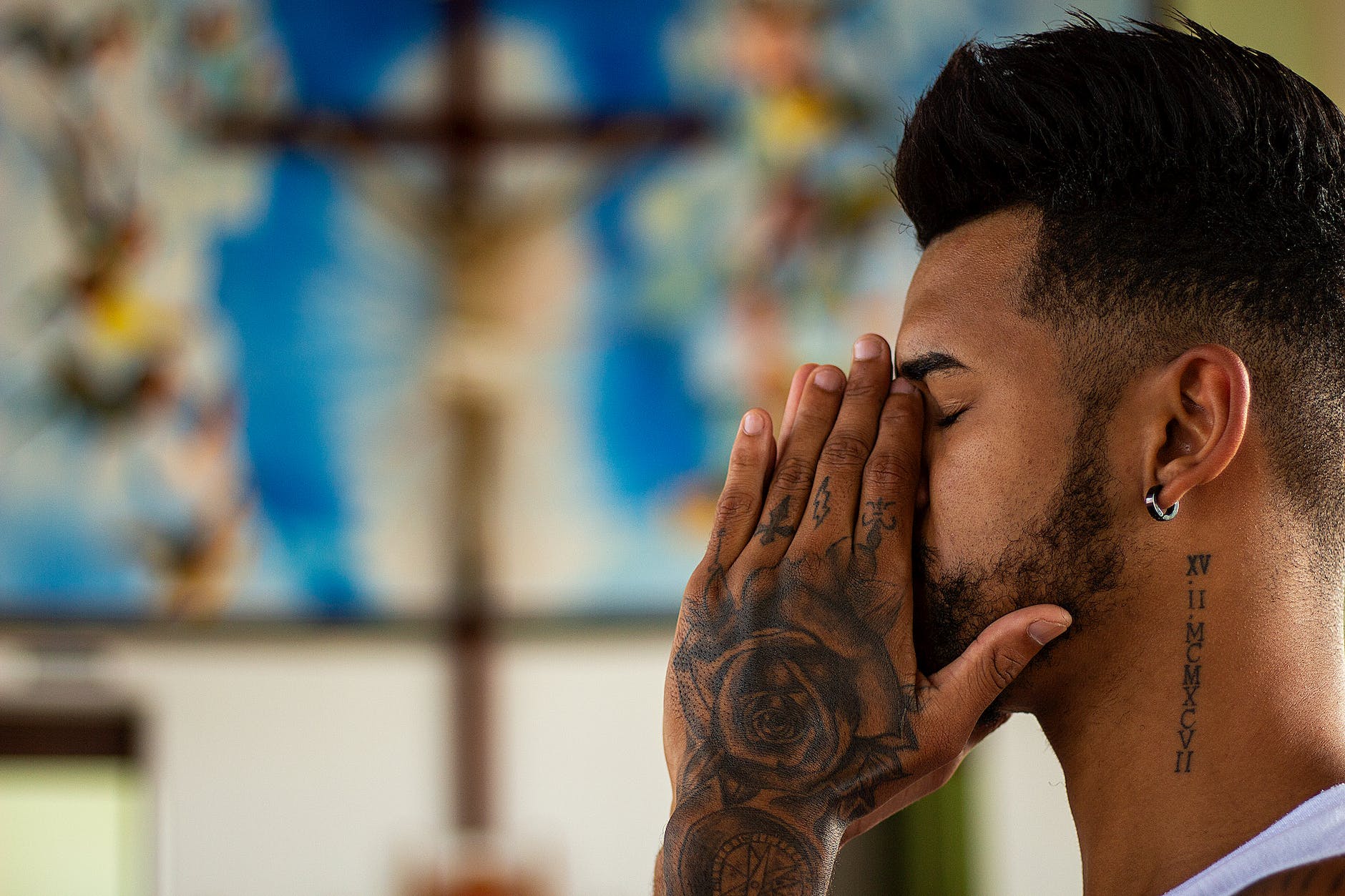
I spoke to God as a friend in prayer, confessing openly my anxieties and frustrations, claiming Bible promises and believing that God would break through somehow. As months and years passed, my restlessness and loneliness turned into desperation. I avoided as far as possible being alone and filled my time with social activities. I went to a Christian student counselor and asked for advice on how to manage my feelings. When she to my astonishment suggested that I might consider finding a good Christian husband, I felt shocked and betrayed. This was completely off-limits. It was unthinkable and atrocious to me to even suggest something like that.
And so I decided to quit counseling and made a commitment to fasting and prayer. I was able to fast for a couple of days, only drinking water. Finally, I broke. I remember waking up one day and sobbing my eyes out. I was completely and utterly broken and empty. I had no more faith to give. Everything I’d stood for and built my life seemed to have failed me. Who could I trust? What was real? Was all that I’d experienced a delusion? Who was I? And where was I headed?
A quest for healing. I realized that I must speak to someone who knew and understood my predicament from personal experience. I decided to visit a Christian support group for celibate, gay men; perhaps they could provide some support and guidance. I went, but was perplexed and disappointed by the rather downcast, depressive atmosphere in the group. They’d sit in a circle, drink beer and share openly about their temptations and moral failures, intending to create a room of openness and grace. Instead, I was left with an impression of how miserable and lonely life was as a gay, Christian man. I left the group and never went back.
Again I sought guidance from the more reliable and mentally stable (as I imagined) straight people and contacted two pastors that I confided in. Both listened intently to my story, but none of them knew what advice to give, except that I don’t lose faith in God. One of them told me that regardless of what I do, I must not leave God behind. Another pastor told me plainly that they didn’t see any solution to my problem. I found a Christian psychologist online and signed up for several sessions. Here it was suggested that perhaps my sexual orientation stemmed from a disconnect with my own gender identity, and that I must find a way to reconnect with the man in me. We never figured out how this might be done, though. There was no practical solution to the problem that I was gay and lonely.
I was finally left with the last option of exploring the other side of the question: Acceptance of my existential need, and whether gay partnership could be compatible with the Bible. I was fully convinced it couldn’t—but my mental state was unbearable and I saw no other solution. I had to consider all the options.
Into the unknown. I knelt down and asked God to guide and protect me. I felt lost and scared. I proceeded to register on a LGBTQ+ dating site with an anonymous profile. Perhaps there was someone there that could relate to my experience?
To my surprise, I found a gay priest who was willing to reason with me from Scripture. He reasoned about God’s grace in a way that was new to me and was hard to dismiss. The real purpose of God’s grace began to present itself more clearly to my perplexed mind. Could God’s grace meet my need of human companionship? Years of emotional repression and shame were being processed through conversations with other gay Christians that I came in contact with. I prayed the same prayer over and over again: “God, help me. Show me the way. Be clear.”
I remember one day when I felt particularly lost. I could no longer open a Bible due to my anxiety and panic attacks. I was still able to read a short, daily devotional written by Sarah Young. I opened up to the following devotional:
Beloved, your honesty and vulnerability draw Me closer to you. Feel the Light of My Presence shining upon you and within you. Let these healing rays soak deep into your being. I want you to both receive My blessing and be a source of blessing to other people. The very things that trouble you most – your weaknesses and wounds – are of greatest use to Me in helping others.
I have shone into your heart the Light of the knowledge of the Glory revealed in My Face. That much Light and Glory simply cannot be contained within you! Your weaknesses and wounds provide openings through which some of this glorious Light spills out of you. By letting these humble, hurting parts of you be exposed, you bless others – as my Light shines through you into their lives. Thus, your weakness and woundedness, consecrated to Me, become treasures in My kingdom.
This short devotional hit me in a most profound and perfect way. I felt seen and validated by God. It was as if God said to me: “Your sense of being broken isn’t imaginary or ignorant. You have brokenness and you have weakness—and this is my plan, in order to use you for good! Your brokenness and weakness are a part of my divine plan.” It finally began to make sense. Could my predicament, my “thorn in the flesh”, be a lesson of humility and a window for grace? I dared to hope that God had a plan with what I was going through, and that I was not lost after all.
Falling and getting back up again. While my religious conversion in many ways had been picturesque, this next part of my life was in no way so. Hitting rock bottom isn’t pretty. It was in desperation that I ventured to explore the world of dating. Being inexperienced, ignorant and naive, and grappling with anxiety, depression and insomnia on top of everything, it was a struggle to stay true to my values and my faith in the rather merciless environment of the gay dating scene. I was terrified of hurting myself—but I was even more terrified of the isolation I’d endured up until this point.
The dynamics of dating as a gay, Christian man really deserves a post of its own. Being gay and Christian puts you in an extremely challenging and lonely position. On the one side, there is a pervasive, sexualized culture that challenges Christian values such as temperance, monogamy and loyalty. On the other side, there’s the Church’s demands for heterosexual marriage or celibacy. You are judged for being Christian by the one side, and you are judged for being gay by the other. Navigating this without losing yourself, your mental health or losing a part of your identity requires real fortitude and courage. If you’re looking for a partner in the middle of all of this… It all can get really messy and unhealthy really fast.
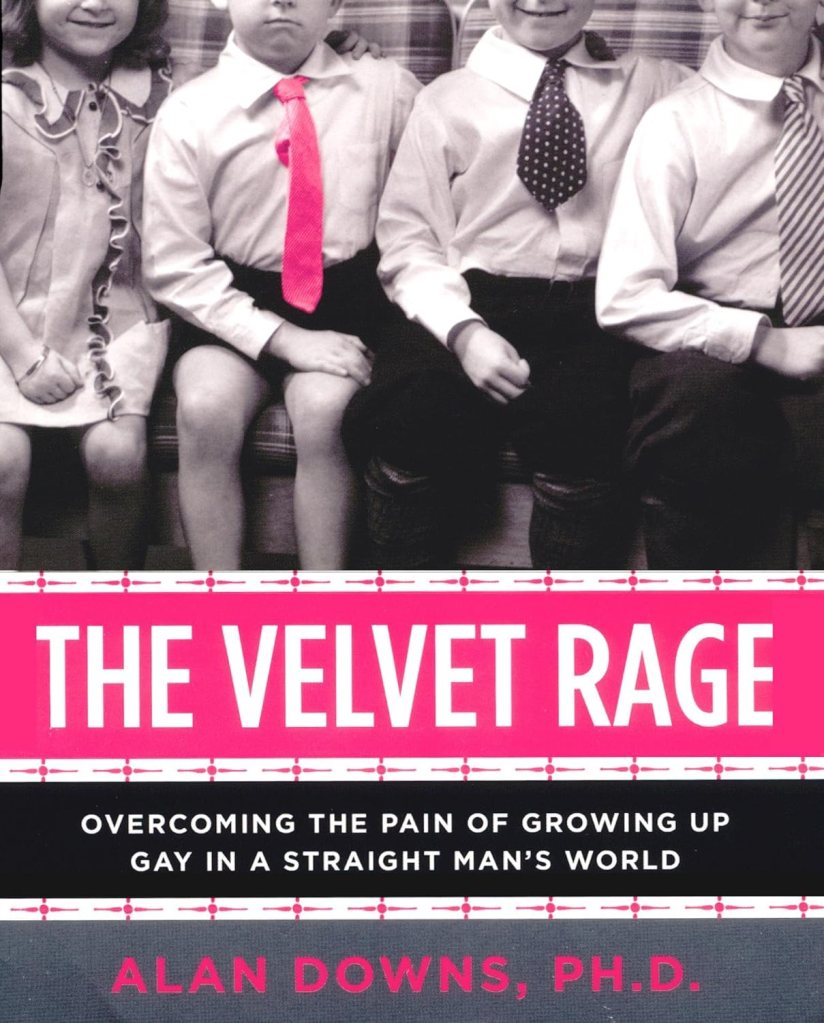
The gay man’s manual. A book that has given me invaluable comfort and guidance in this process is Alan Down’s The Velvet Rage. This book explains from the perspective of a seasoned, gay psychologist the unhealthy behaviors and addictions prevalent among gay men, and how these behaviors are compensation for the internalized shame of growing up with the stigma of being gay. The book provides practical ways of addressing and dealing with the underlying issues behind the hedonism prevalent in gay culture in order to bring about a healthier, more meaningful, and happier life. I highly recommend that every gay man read it. Or anyone struggling with shame and addiction. I’ll probably write a review of it in another post.
Choosing openness over image. In my journey I’ve chosen transparency and openness, also at the peril of my own image and standing in the Church. As a teenager, I’d openly confessed my same-sex attractions, but also affirmed that gay people must live in celibacy, which I also did at that point. When I changed my mind years later, I struggled with a sense of defeat, and my selfish wish was to keep my change of mind private. But this wouldn’t be fair to the public—to say one thing in public and do something else in private. This is a real temptation when image and social standing is a primary concern. It’s true that one’s sexual attractions are a rather private and personal matter. But I’d already been vocal about my stance on the issue, and so I felt the only responsible thing to do was to inform the public about my change of mind as well.
And so, in the name of truth and honesty, I reluctantly wrote a post on Facebook. Now I just had to say it as it was. I gave expression to the built-up anger and frustrations with the Church, followed by a confession that I’d changed my mind and that I was going to look for a partner and not repress this side of me any longer. I was done with celibacy and done with political correctness. As a theology graduate and a former pastor intern with an extensive social network, I knew that this was not going to go unnoticed.
And it didn’t. But to my astonishment, I was met with a wave of sympathy, also from Church leaders, with messages of validation and praise for my openness and honesty. I saw a completely different side of the Church. Notwithstanding my frustrations with it and the misguided efforts by some pastors to guide me (like one pastor who told be that I was suicidal because I hadn’t prayed enough about it), there was a large group of Church members who understood and in their own way could relate to my frustrations. I saw a gleam of realness, of humanity, behind the picture-perfect facade. Was there a place for me in the Church after all?
I was lucky. Sadly, my experience is far from representative of the experiences of LGBTQ+ people that have grown up in the Church. Some have been disfellowshipped while others have left the Church in fear of being outed and subjected to discipline, feeling that there was no understanding nor any place for them there. The experiences of these people was the topic for my master’s thesis in 2019, which I’ll delve into in another post.
The last couple of years, I’ve been invited by various leaders and ministries in the Church to share my experience. I’ve been given the opportunity to share my story with lay members, pastors, theologians and Church leaders in different arenas. For the first time, I see that people like me are being given a voice, and that the Church is taking us more seriously.
People have often asked me where I’m at now, what is my stance on the issue, what is my relationship to God like. My answer is that I’m a Christian, gay man. I believe this sums up my core identity. I’m open about this with everyone. I’m no longer afraid of being judged by Christians for being gay, or being judged by other gay people for being Christian, because only I know the price that I’ve payed in order to be who I truly am. And after losing my mental health and nearly losing myself, I made a decisive choice—a choice to henceforth accept who I am.
Acceptance, not sinlessness. Now I do feel that I’m accepted by my close family, my friends, and I choose to believe that I’m accepted by God. When I look at myself and my weaknesses and failures, it’s easy for me to feel that I cannot be accepted by God. I’m selfish, undisciplined, and I make the same mistakes over and over again. On top of that, my sexual orientation does not conform with the heterosexual ideal in the Bible. But I’ve come to understand that while my orientation never was choice, faith is a choice and not just a feeling. While I cannot choose to be straight, I can choose to believe that God accepts the real me because of what Jesus has accomplished. This choice of faith I make for the sake of my mental, emotional and spiritual health.
I’m work in progress. It was my struggle with my sexual orientation that opened my eyes to the fact that God receives the imperfect. That God receives those who fall short and are work in progress. God receives those who realize that they’re sinners, that they miss the mark. This is exactly why Jesus died on the cross, so that such can go free, forgiven, and be accepted. This is what awakens the love of God in the heart and gives the growth that God wants. God accepts imperfect people who put their faith in Christ. “God opposes the proud but gives grace to the humble” (James 4:6). For this reason I’m filled with humble gratitude, take courage and press on.
This is my testimony. What is yours? Feel free to share in the comment section below!
 Kendel's Messiah
Leave a comment