
Many Christians argue that sola scriptura—the view that scripture alone is the infallible standard of Christian doctrine—doesn’t work. Their argument is that the principle of sola scriptura is not found in the Bible. They also argue that the church created the Bible and therefore has authority over the Bible. In addition, some point to the fact that the Protestant movement has split into many different denominations claiming this is proof that sola scriptura is wrong.
What is sola scriptura? Historically, sola scriptura meant that the Scriptures were to be regarded as the highest and only infallible authority in the church, over against church tradition, papal authority or councils. Sola scriptura did not mean that the Scriptures were to be regarded as the only authority—or that reason, history or the church should be ignored by Christians. But wherever there was conflict or disagreement of doctrine and practice, the Scriptures were to have the final word on the issue.
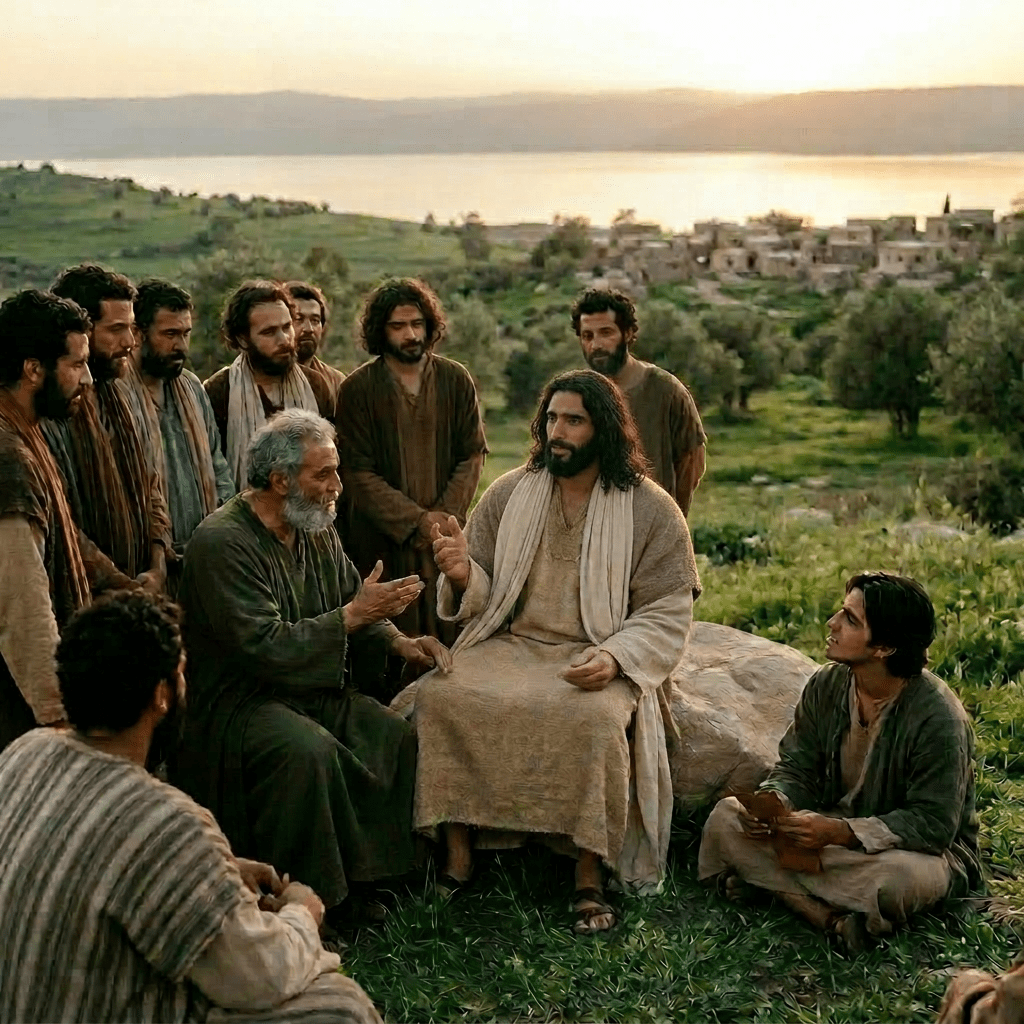
Christianity owes its existence to sola scriptura. If we consider how Christianity historically was formed, it becomes evident that the practice of sola scriptura is the reason why Christianity exists as a religion. It was not the adherence to the received traditions but the critical assessment of Jewish tradition based on a reasoning from the Scriptures that led Christ to establish His messianic ministry. Jesus was condemned by the religious leaders of His time for not conforming to the received traditions (Matthew 15:2; Mark 7:1-13). He was accused of breaking the Sabbath because He healed people on the Sabbath (John 5:16, 18; John 9:16). However, Jesus used the Scriptures and reason to prove that He did not break the Sabbath. Jesus did not submit to the traditions of the church that went against God’s written word or that laid unnecessary burdens on people that were not required by Scripture. This is the essence of sola scriptura.
When the religious leaders criticized Jesus’ disciples for not adhering to the tradition of washing their hands before eating, He replied:
“Well did Isaiah prophesy of you hypocrites, as it is written, ‘This people honors me with their lips, but their heart is far from me; in vain do they worship me, teaching as doctrines the commandments of men.’ You leave the commandment of God and hold to the tradition of men. […]
You have a fine way of rejecting the commandment of God in order to establish your tradition! For Moses said, ‘Honor your father and your mother’; and, ‘Whoever reviles father or mother must surely die.’ But you say, ‘If a man tells his father or his mother, “Whatever you would have gained from me is Corban”’ (that is, given to God)—then you no longer permit him to do anything for his father or mother, thus making void the word of God by your tradition that you have handed down. And many such things you do.”
Mark 7:6-13, ESV
Christ condemned the Jewish leaders for departing from the written commandments in order to protect their unscriptural customs. And when Christ and His disciples departed from the unscriptural customs, they were judged as a heretical sect, persecuted and eventually executed. They were accused of disturbing the peace and causing uproar.
But they were urgent, saying, “He stirs up the people, teaching throughout all Judea, from Galilee even to this place.” (Luke 23:5, ESV)
“These men who have turned the world upside down have come here also…” (Acts 17:6, ESV)
“For we have found this man a plague, one who stirs up riots among all the Jews throughout the world and is a ringleader of the sect of the Nazarenes.” (Acts 24:5, ESV)
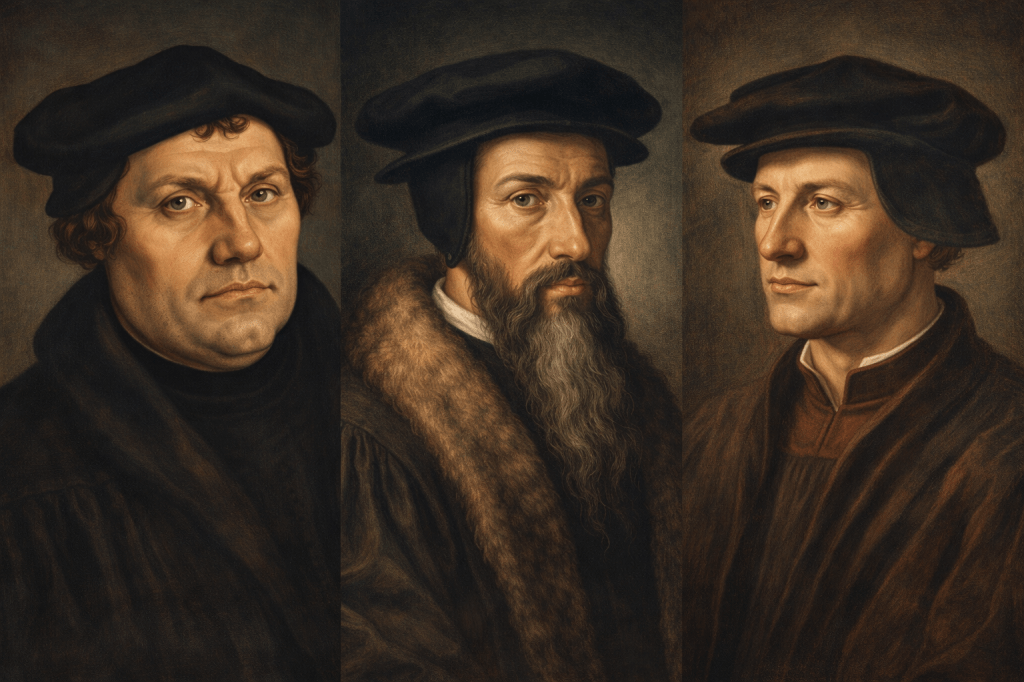
Protestantism emerged in the same way as Christianity. The emergence of Protestantism happened in the same way as with early Christianity—not by the adherence to church tradition, but by a critical assessment of tradition based on a reasoning from the Scriptures. Sola scriptura was coined by the reformer Martin Luther and was the driving motive for reformers such as Martin Luther, John Calvin and Ulrich Zwingli. Where did he adopt this sola scriptura notion from? From the practice of Christ and His apostles as recorded in the New Testament. The reformeres criticized the traditions of the church that were not substantiated by the Scriptures, such as the teaching of purgatory, the sale of indulgences, and the unique authority of the pope. And like Jesus and the apostles, the reformers too were judged as a heretical sect and persecuted, some of them being finally executed. The pattern is evident.
Many Christians ask: Didn’t the church create the New Testament? Was it not the church that decided what scriptures were to be regarded as divinely inspired? How then can the Scriptures be the highest authority if it was the church that selected them and canonized them?
The claim that the church created the New Testament through its own authority is historically false. The New Testament writings were initially acknowledged by the majority of lay Christians, not on the basis of ecclesiastical authority, but by proving them against the Hebrew Bible and the eye-witness accounts of Jesus. In all the letters of the New Testament, the apostles employ the Hebrew Bible to prove that Jesus is the Messiah and that their teaching is from God. Jesus Himself used the Hebrew Bible to prove His messianic identity:
“You search the Scriptures because you think that in them you have eternal life; and it is they that bear witness about me.” (John 5:39, ESV)
“If you believed Moses, you would believe me; for he wrote of me.” (John 5:46, ESV)
Beginning with Moses and all the Prophets, he interpreted to them in all the Scriptures the things concerning himself. (Luke 24:27, ESV)
“Everything written about me in the Law of Moses and the Prophets and the Psalms must be fulfilled.” (Luke 24:44, ESV)
“Thus it is written, that the Christ should suffer and on the third day rise from the dead.” (Luke 24:46, ESV)
“Have you never read in the Scriptures: ‘The stone that the builders rejected has become the cornerstone?’” (Matthew 21:42, ESV)
This took place to fulfill what was spoken by the prophet, saying, “Say to the daughter of Zion, ‘Behold, your king is coming to you, humble, and mounted on a donkey.’” (Matthew 21:4–5, ESV)
“For just as Jonah was three days and three nights in the belly of the great fish, so will the Son of Man be three days and three nights in the heart of the earth.” (Matthew 12:40, ESV)
The Scripture will be fulfilled, “He who ate my bread has lifted his heel against me.” (John 13:18, ESV)
It was by studying the Hebrew Scriptures that the first Christians (who were Jewish) checked if the teaching that Jesus was the Messiah was true.
The brothers immediately sent Paul and Silas away by night to Berea, and when they arrived they went into the Jewish synagogue. Now these Jews were more noble than those in Thessalonica; they received the word [about Jesus as the Christ] with all eagerness, examining the Scriptures daily to see if these things were so. Many of them therefore believed, with not a few Greek women of high standing as well as men.
Acts 17:10-12, ESV
Notice how the Jews in Berea were commended for their nobility, not because they implicitly and unquestioningly believed the apostles or their miracles, but because they first proved their teaching by checking the Hebrew Scriptures.

The New Testament saturated with references to the Hebrew Bible. The letters of the apostles use the Hebrew Scripture as the basis and proof of their teaching. The apostle Paul’s teaching on justification and salvation by faith, and the passing away of the old covenant, is based on the story of Abraham (Romans 3-4) and on the Old Testament prophecies predicting a new covenant (Hebrews 10) found in the Hebrew Bible. The New Testament does not cancel nor contradict the Hebrew Bible, but is the recorded fulfillment of the Hebrew Bible’s promises, continuing the development of the principles in the Hebrew Bible. Jesus Himself explicitly said that He was not to abolish the law of Moses but to fulfill it (Matthew 5:17). It was the Hebrew Bible that promised the coming of a Messiah who would carry the sins of the world (Genesis 3:15; Deuteronomy 18:15-19; Isaiah 9:6-7; Isaiah 53; Micah 5:2; Malachi 3:1). The Hebrew Bible also promised that there would be a new covenant unlike the old that (Jeremiah 31:31-34). The Hebrew Bible confirmed the teachings of Jesus and the apostles, and therefore their teachings were accepted, written down and read as a part of Scripture by early Christians. The decisions of later church councils to canonize the writings of the apostles was only a formal recognition of what Christians already were doing.
Therefore: The church did not create the Bible; it was the Bible (the Hebrew Bible) that created the church and the New Testament. The Christian church and the New Testament emerged because Jesus and the apostles taught the true meaning of the Hebrew Scriptures. The Bible created the church!
The true place of tradition. In his letters to the early church, the apostle Paul commends the churches for holding to the oral and written traditions received by the apostles (2 Thessalonians 2:15 and 3:6; 1 Corinthians 11:2). What traditions were these oral traditions? It is safe to say that the oral traditions of the apostles cannot contradict the written letters of the apostles, inasmuch as the apostles did not contradict themselves. Thus, oral tradition is also subject to the Scriptures. It is clearly seen in the life of Jesus as recorded in the Gospels that Christians are not required by God to submit to traditions that go against Scripture or that lay burdens on people that God doesn’t require.
The division argument. Some Christians argue that sola scriptura must be false since it has lead to so many different denominations and creeds. But do they regard Judaism as a false religion? Judaism in Jesus’ day was not a monolithic, unified religion. It was highly diverse and often internally divided, just as every Christian church is today. There were the Pharisees who emphasized oral law and the afterlife; there were the Sadducees who emphasized the written Torah and denied the afterlife; there were the ultra-conservative Essenes, the violent Zealots, and the worldly-minded Herodians. There has never been perfect unity in God’s church; there have been schisms and disagreements as long as the church has existed. The Catholic church itself has a history of schisms, anti-popes, and various internal groups that have accused each other of doctrinal error.
The view that division is evidence of false religion is impossible to maintain for a Christian who believes in Jesus. Jesus caused division and openly admitted that this was a part of His purpose.
Do not think that I have come to bring peace to the earth. I have not come to bring peace, but a sword. For I have come to set a man against his father, and a daughter against her mother, and a daughter-in-law against her mother-in-law. And a person’s enemies will be those of his own household.
Matthew 10:34-36, ESV
Jesus’ message of truth, justice, peace and reconciliation with God has always caused opposition and division in a world filled with wicked people. Wicked people are also found in the church; therefore God’s truth has found opposition even in the churches. As shown earlier: Jesus, the apostles, and the first Christians were multiple times condemned for causing division and uproar. This plain fact decidedly proves that division is not in itself any final proof of falsehood or false religion. Christianity itself emerged through a division between Christ and the religious leaders of His day.
No apostolic authority today besides the Scriptures. Many Christians argue that the church’s authority is not subject but equal with the Scriptures since church leaders have received apostolic authority. They claim that Christians have no right to contradict or challenge church leaders because they stand in the place of the apostles.
But the apostles of Jesus explicitly defined the criteria for being recognized as an apostle:
So one of the men who have accompanied us during all the time that the Lord Jesus went in and out among us, beginning from the baptism of John until the day when he was taken up from us—one of these men must become with us a witness to his resurrection.
Acts 1:21-22, ESV
After Judas Iscariot killed himself, the eleven remaining apostles decided that they must find someone to fill his place. According to their own words, the criteria for being recognized as an apostle were as follows:
- Knowing Jesus’ disciples personally (“went in and out among us”).
- Being an eye-witness to Jesus’ life, death, and resurrection (“beginning from the baptism of John until the day when he was taken up from us”).
From the apostles’ own words, we can know that no church leader today would be recognized by them as an apostle holding apostolic authority because no church leader today knew the apostles personally nor witnessed Jesus’ life. And what about the apostle Paul? Paul, being the author of the majority of the epistles in the New Testament, knew the apostles personally (Galatians 2:7-9; 2 Peter 3:15-16) and was himself a witness to Jesus’ resurrection (1 Corinthians 9:1; 1 Corinthians 15:8-9). Paul was therefore recognized by the apostles as an apostle holding apostolic authority. His writings were regarded by the apostle Peter as authoritative (2 Peter 3:15-16).
Since all of the apostles have died, there is no apostolic authority in the church today besides their letters in the New Testament. The whole church, including all the leaders of the church, is therefore subject to Scripture and must be tested against Scripture, which are the written teachings of Jesus, of the apostles and the prophets of old. No church leader today has the right to go against or change their teaching.
For this reason I believe that sola scriptura is a principle that every Christian who claims to follow Jesus ought to follow. Christ and the apostles practiced sola scriptura, and so should every Christian.
This is my testimony. What is yours? Feel free to share in the comment section below!


Leave a comment